Why visit the Cu Chi Tunnels
Why visit the Cu Chi Tunnels
A war fought underground
During the Vietnam War, the fighters of Cu Chi built an immense network of hand-dug tunnels — perhaps 120 kilometres in all — and lived beneath the jungle for years. The tunnels held sleeping quarters, kitchens, field hospitals, workshops and command rooms, and were central to the 1968 Tết Offensive. Visiting them is one of the most direct ways to understand the war from the Vietnamese side.
History you can step into
This is not a museum behind glass. You can find the near-invisible trap doors, see the ventilation and defences that let people survive underground, and — if you choose — crawl through a section of tunnel that has been widened and lit for visitors. It's confronting, moving and unforgettable in a way a display case never is.
An easy trip, a serious subject
Cu Chi is a straightforward half-day from Ho Chi Minh City, but it deserves a thoughtful visit: this is a site of a long and painful war. A good guide gives the context that turns tunnels and traps into a human story — which is why almost everyone comes on a guided tour.
What you'll see
What you'll see
A visit walks you through the memorial park above ground and, in part, below it. Here's what a typical tour covers.
- The trap doors
Hidden entrances
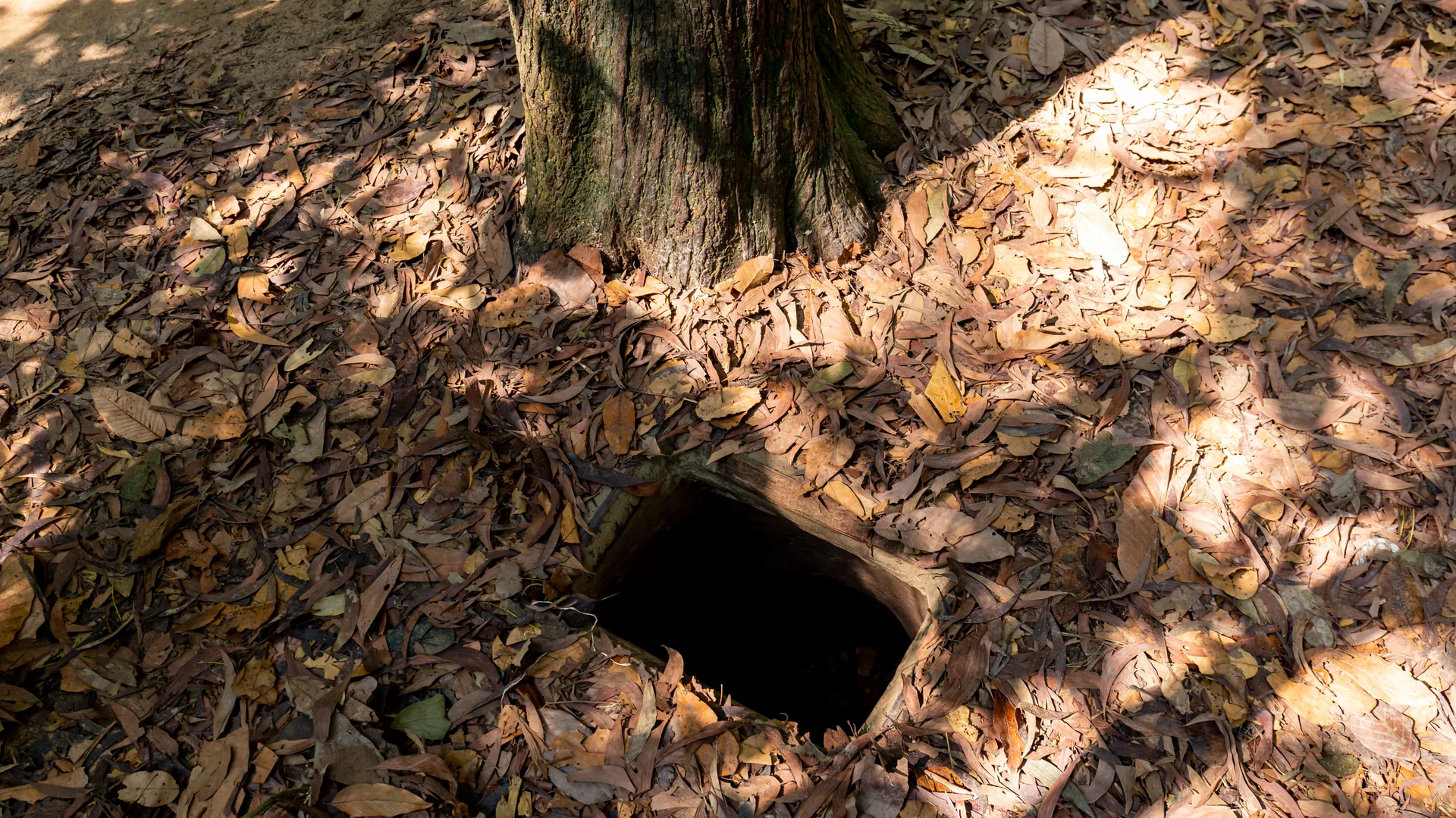
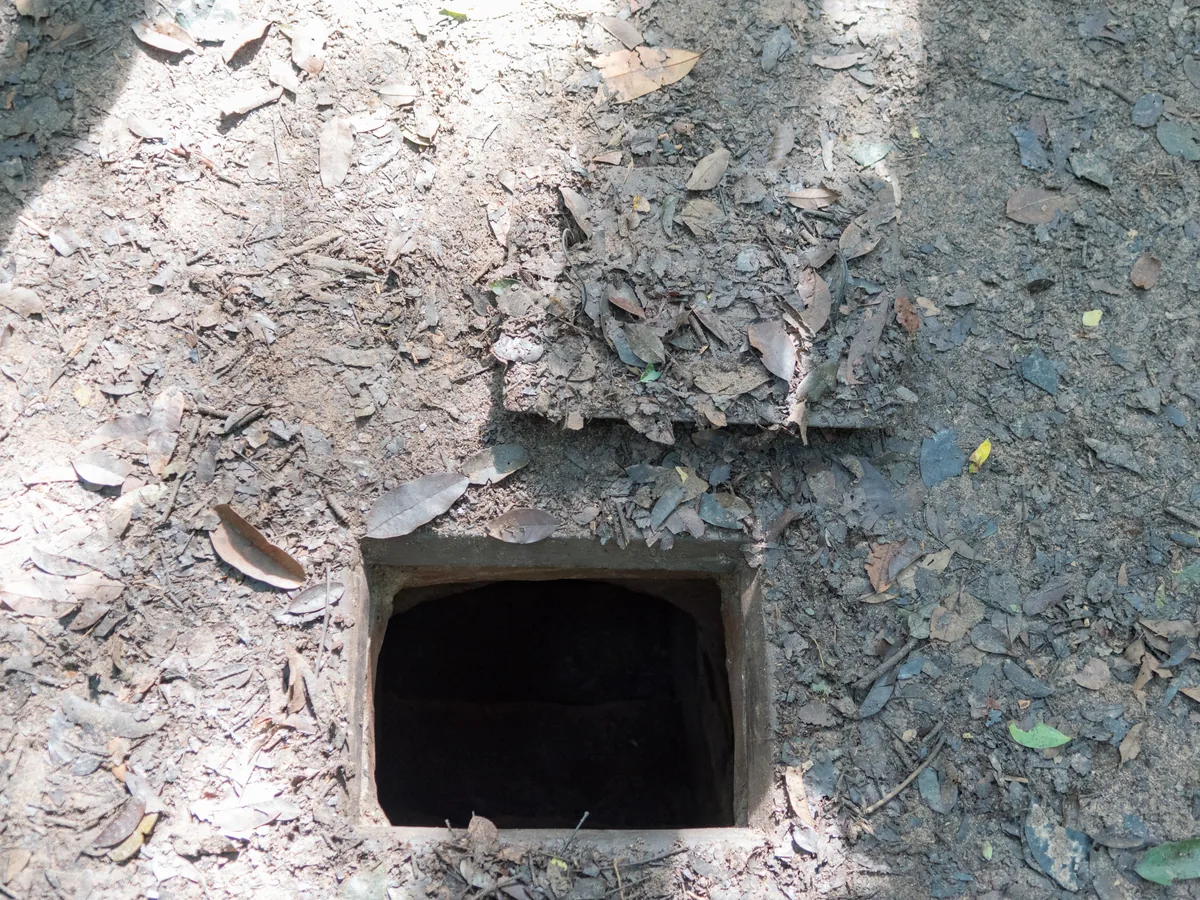
Guides reveal the camouflaged trap doors — tiny, near-undetectable hatches in the jungle floor that soldiers vanished into. Seeing how completely they disappear is the moment the tunnels' ingenuity really lands.
- The tunnels
Crawling a section
At the heart of the visit is the chance to go underground yourself, through a stretch of tunnel widened and dimly lit for visitors. It's short and optional, but even a few metres in the dark, low passage is powerfully evocative.
- Underground life
Kitchens, hospitals, command rooms
The park shows how people lived below: the smokeless Hoang Cam kitchens, field hospitals, wells and meeting rooms where campaigns were planned. It's the everyday reality of years spent underground.
- The defences
Traps & ventilation
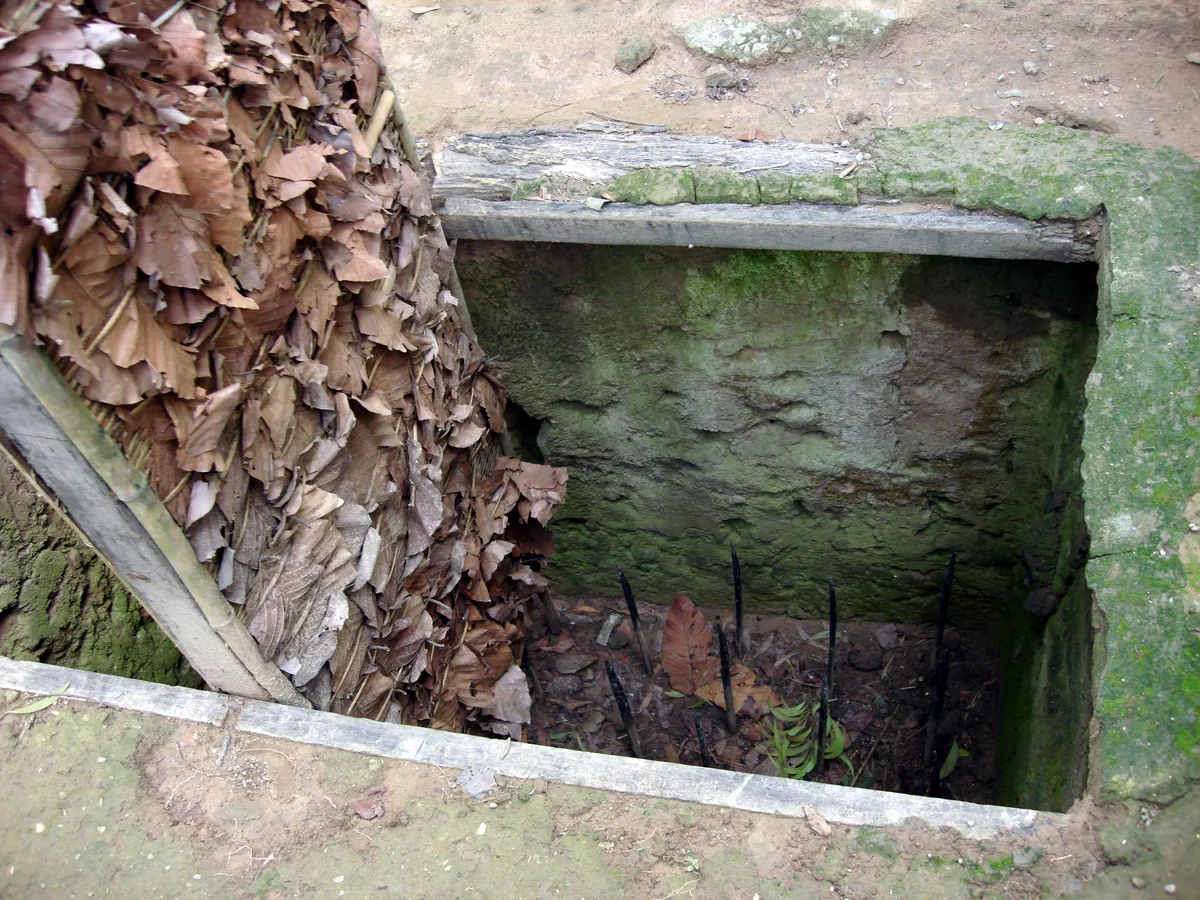
Reconstructions show the booby traps and the hidden air vents disguised as termite mounds — the grim, resourceful engineering of the tunnel war. Guides explain them plainly and without spectacle.
- Above ground
The memorial & displays
Above the tunnels the park has a short documentary film, displays of the war era, and preserved craters and vehicles — the memorial context that frames what you see below. There is also an optional shooting range on site.
- Two sites
Ben Dinh or Ben Duoc
Visits go to one of two sites: Ben Dinh, closer to the city and more set up for visitors, or Ben Duoc, further out, quieter and closer to the original tunnels and the main memorial. Most day tours use Ben Dinh; check which your tour visits.
Getting there & planning
Getting there & planning
Cu Chi is northwest of Ho Chi Minh City, visited on a half-day tour or by river boat — here's how it works.
A half-day from the city
The tunnels lie in the Cu Chi district, around 1–1.5 hours by road from central Ho Chi Minh City. Almost everyone visits on a morning or afternoon tour that includes transport and a guide; a few options come by speedboat along the Saigon River for a scenic alternative to the coach.
Ben Dinh vs Ben Duoc
There are two visitor sites. Ben Dinh is nearer the city, busier and more geared to tourists; Ben Duoc is further out, quieter and closer to the original tunnels and the memorial temple. Most standard tours go to Ben Dinh — if you want the quieter, more authentic site, look for a Ben Duoc option.
Going underground
The tunnel section open to visitors has been enlarged and lit, but it's still low, narrow, warm and dark — crawling it is optional, and there are exit points along the way. If you're claustrophobic you can skip it and still see everything above ground and the trap doors.
What to wear and bring
Wear light, cool clothing you don't mind getting dusty, and closed shoes for uneven jungle ground. Bring water and insect repellent. Visit with respect: this is a place of war and remembrance, not an adventure playground.
Cu Chi & Ho Chi Minh City, in pictures
Cu Chi & Ho Chi Minh City, in pictures
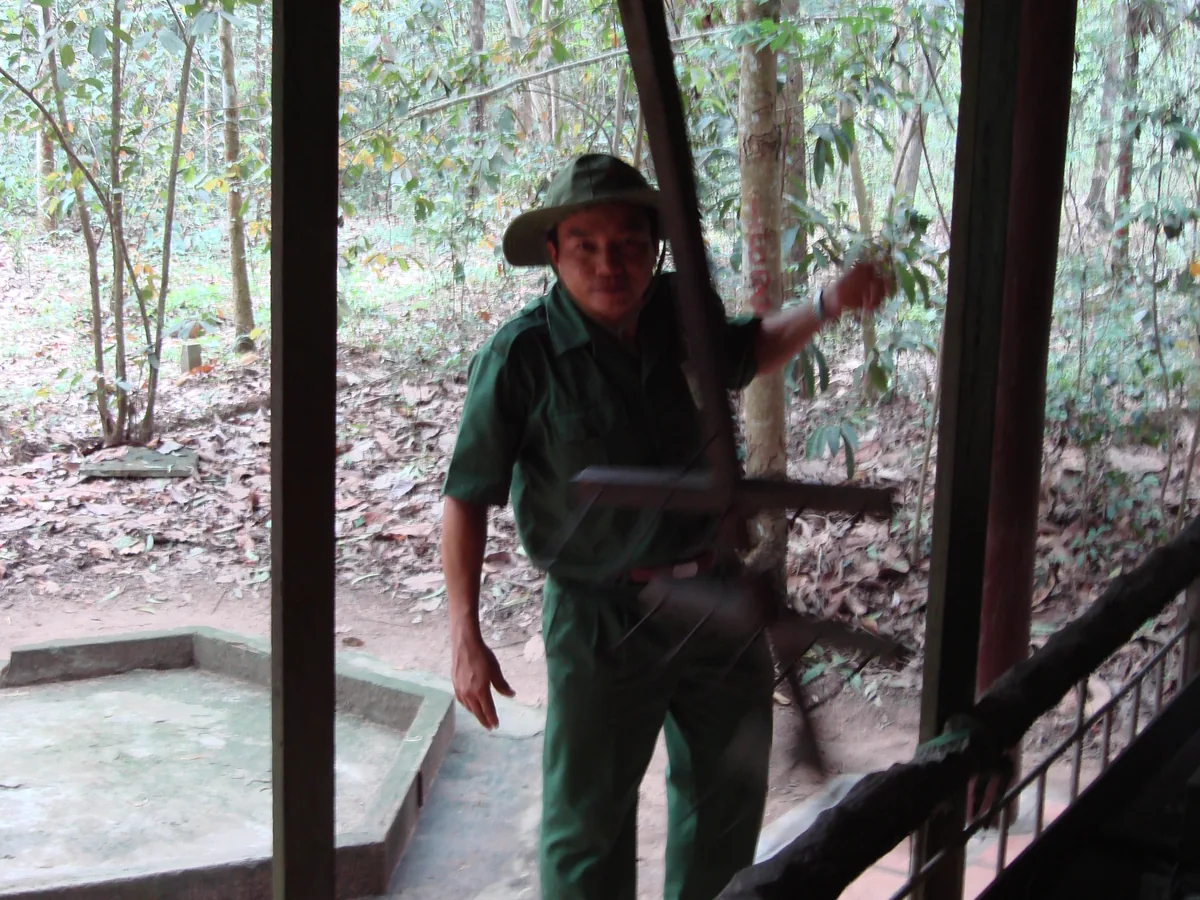
The tunnels, trap doors and jungle of Cu Chi, and the city you set out from.

Tour options & what's included
Tour options & what's included
| Option | What it includes | Good to know |
|---|---|---|
| Half-day group tour | Transport, guide and entrance, morning or afternoon | The standard, best-value way to visit |
| Speedboat tour | Travel to Cu Chi by boat along the Saigon River | A scenic alternative to the road |
| Private tour | Your own guide, vehicle and pace | More flexible and personal; costs more |
| Combined tours | Cu Chi paired with the city or the Mekong Delta | Efficient if you're short on days |
Ways to visit the Cu Chi Tunnels
Find a Cu Chi Tunnels tour for your dates
Every option below is bookable through GetYourGuide, with live availability and the final price shown in your own currency before you pay.
Planning your visit
Planning your visit
Morning or afternoon
Half-day tours run in the morning or the afternoon. Mornings are cooler and tend to be a little less crowded; afternoons pair well with a relaxed morning in the city. Both include the road transfer, a guide and entrance — the booking widget shows the live options and prices.
Choose your site and mode
Decide whether you want the closer, busier Ben Dinh or the quieter, more original Ben Duoc, and whether to travel by road or by Saigon River speedboat. If the tunnels themselves matter most to you, a smaller-group tour gives more time and less queueing at the crawl section.
Prepare for the conditions
Wear cool, dark clothing you don't mind getting dusty and closed shoes, and bring water and insect repellent. The optional tunnel crawl is low, warm and dark — fine for most, but easy to skip if you're claustrophobic, without missing the rest of the visit.
Visit thoughtfully
This is a war memorial, and the site presents the war from the Vietnamese perspective, including a patriotic film. Come with an open, respectful mind; a good guide will give balanced context. It's a moving half-day, not a thrill ride — and all the more worthwhile for it.
Booking flexibility
The listings offer free cancellation up to 24 hours before and, on many options, reserve-now-pay-later — so you can lock in a date without paying today and still adjust if your Ho Chi Minh City plans change.
Planning a Cu Chi day from Ho Chi Minh City
Planning a Cu Chi day from Ho Chi Minh City
GEO/FAQ
Cu Chi Tunnels questions
What are the Cu Chi Tunnels?
The Cu Chi Tunnels are an immense network of hand-dug tunnels in the Cu Chi district of Ho Chi Minh City, used by Viet Cong fighters during the Vietnam War as living quarters, hospitals, supply routes and command posts — and central to the 1968 Tết Offensive. Around 120 km of tunnels once ran beneath the area; today part of the network is preserved as a memorial park open to visitors.
Can I actually go inside the tunnels?
Yes — a section of tunnel has been widened and dimly lit so visitors can crawl through it. It's short and entirely optional, with exit points along the way. The passage is still low, narrow, warm and dark, so if you're claustrophobic you can skip it and still see the trap doors, defences and everything above ground.
How do I get there from Ho Chi Minh City?
Cu Chi is about 1–1.5 hours northwest of central Ho Chi Minh City. Nearly everyone visits on a half-day guided tour (morning or afternoon) that includes transport and a guide. Some tours travel by speedboat along the Saigon River, a scenic alternative to the road.
What's the difference between Ben Dinh and Ben Duoc?
There are two visitor sites. Ben Dinh is closer to the city, busier and more set up for tourists; Ben Duoc is further out, quieter and nearer the original tunnels and the main memorial. Most standard day tours go to Ben Dinh — if you'd prefer the quieter, more authentic site, look for a Ben Duoc option. Check which your tour visits.
Is it suitable for families and older visitors?
The above-ground park — trap doors, displays, kitchens and the film — is accessible to most visitors, and the tunnel crawl is optional, so families and less mobile visitors can get a lot from a visit without going underground. Bear in mind it's a serious war-history site; parents may want to prepare children for the subject matter.
Is there anything to know before booking?
It's a moving site about a painful war, presented from the Vietnamese perspective (including a patriotic documentary), so come with a respectful, open mind. Wear cool, dark clothes and closed shoes, and bring water and repellent. The listings offer free cancellation up to 24 hours before, so you can hold a date without paying today.
Still deciding which site, or which tour?
Leave your email and roughly when you're travelling — we'll send a short rundown of how the Ben Dinh and Ben Duoc sites and the tour options compare, and how to plan the half-day.